




























Businesses across the UAE will face new annual music licensing fees from December 1, 2026, under a tariff framework introduced by the Ministry of Economy and Tourism. The charges apply to restaurants, cafes, shops, malls, hotels, fitness centres, broadcasters and other businesses that use copyrighted music.
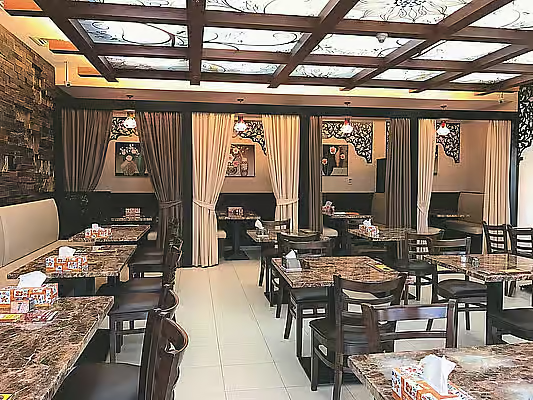
Restaurants and cafes with up to 50 seats will pay Dh1,500 annually, while shops using background music will face fees starting at Dh1,700. Larger establishments will pay higher charges depending on their seating capacity or floor area.
Restaurants and cafes offering DJ services or live entertainment will be subject to a separate, higher tariff. For venues with up to 50 seats, the annual fee will be Dh2,500, rising according to capacity and reaching a maximum of Dh8,000.
Fees for shops and malls
Retail businesses will be charged according to their floor area. Shops measuring up to 300 square metres will pay Dh1,700 a year, while premises between 301 and 700 square metres will pay Dh3,400.
Shopping malls will have a separate fee structure based on their shared public areas. Charges begin at Dh625 for the first 100 square metres and can reach a maximum annual fee of Dh50,000.
Hotels, gyms and broadcasters included
The new UAE music tariff also covers hotels, fitness centres, radio stations, television channels and premium airlines.
Hotels will pay fees based on their star rating and number of rooms, with the highest annual ceiling set at Dh25,000. Fitness centres will face charges based on their floor space, while broadcasters will pay a percentage of their annual income, subject to minimum fees.
Premium airlines providing in-flight entertainment will also be covered, with annual charges capped at Dh45,000.
Why has the UAE introduced the fees?
The tariff forms part of the UAE’s broader framework for protecting copyright and related rights. It is designed to ensure that composers, songwriters, performers, producers and music publishers receive royalties when their work is commercially used.
Licensed collective management organisations will collect and distribute the relevant royalties under the ministry’s supervision. These organisations must obtain annual permits and cannot change the approved tariff structure without prior approval.
Certain users will remain exempt, including government entities, educational institutions, national occasions and non-commercial private celebrations.
The framework also includes a Cultural Fund, which will support musicians and contribute to promoting Emirati music regionally and internationally.
For UAE businesses, the new system means that establishments using copyrighted music should review the applicable category and prepare for the charges before the December 1 implementation date.