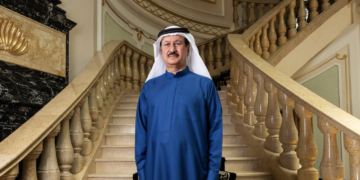
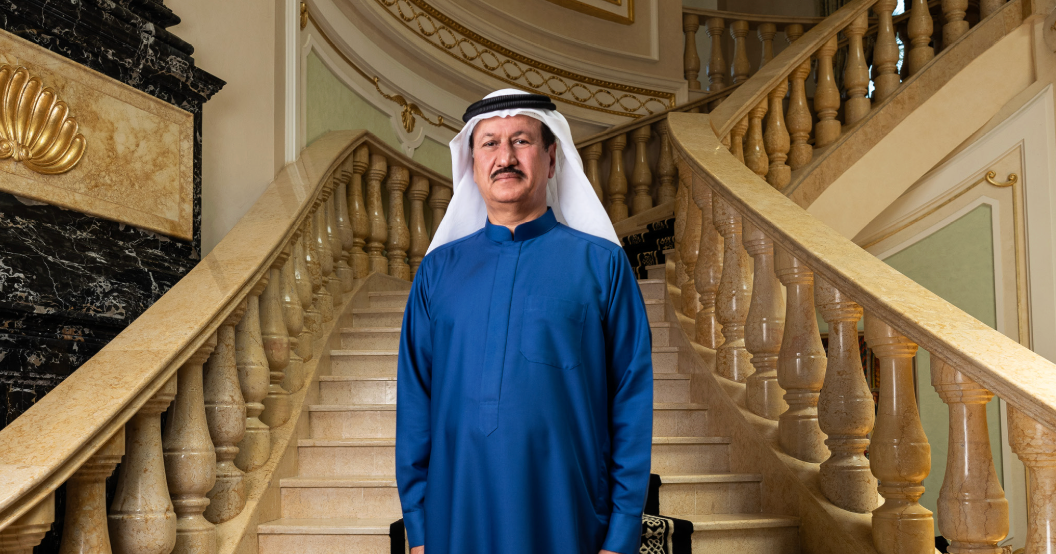
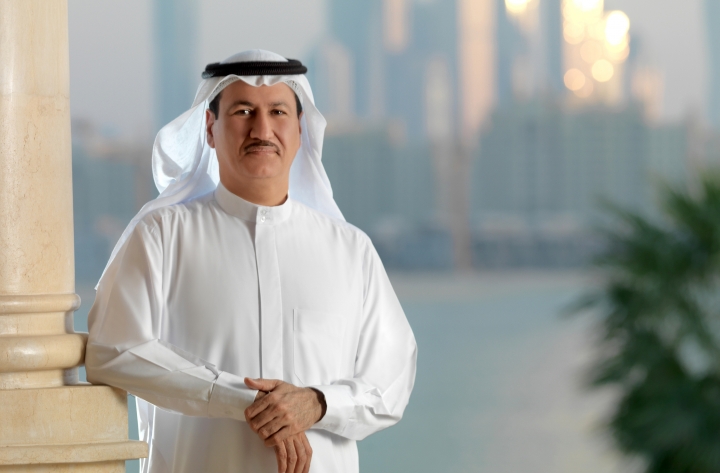
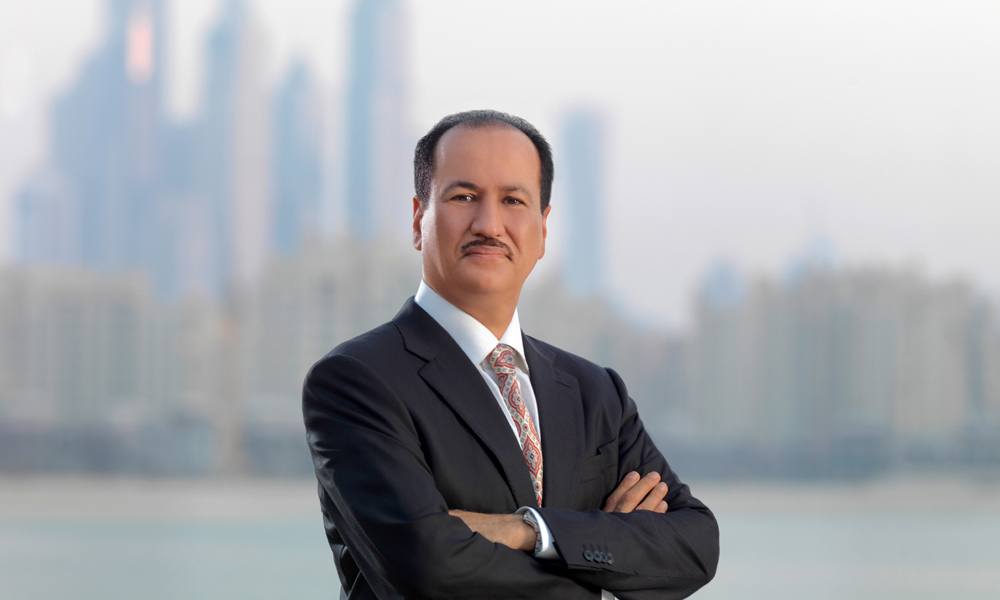
Long before Dubai became one of the world’s most sought-after destinations for luxury property, Hussain Sajwani saw possibilities where many saw uncertainty. At a time when the emirate was beginning to open its real estate market to international investors, he recognised that global buyers were looking for more than apartments. They wanted lifestyle, prestige and long-term value. That belief would eventually shape one of the region’s largest property development companies and establish Sajwani as one of the most influential entrepreneurs in the Middle East.
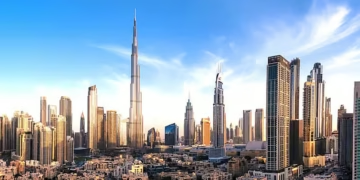
Today, Hussain Sajwani is widely known as the founder and chairman of DAMAC Properties, a company whose projects have become a familiar part of Dubai’s skyline. From luxury towers overlooking the city’s business districts to master-planned communities with golf courses and branded residences, his developments have helped define the premium segment of the UAE’s property market.
His journey, however, began long before construction cranes became a symbol of Dubai’s growth.
Raised in Dubai in a family involved in commerce, Sajwani developed an interest in business at an early age. After completing his education in industrial engineering in the United States, he returned to the UAE during a period when the country’s economy was beginning to diversify beyond oil. Rather than entering the family business permanently, he chose to build his own ventures, starting with a catering company that supplied large organisations across the Gulf.

The business gave him firsthand experience in managing operations, building client relationships and identifying opportunities in emerging markets. Those lessons would later prove invaluable when Dubai’s real estate sector entered a new phase of development.
The defining moment came in 2002 when Dubai introduced freehold property ownership for foreign buyers in designated areas. While many developers were still assessing the long-term impact of the policy, Sajwani moved quickly. He established DAMAC Properties with a clear objective of serving international investors looking for luxury homes in one of the world’s fastest-growing cities.

Instead of competing on price alone, the company positioned itself around quality, architecture and lifestyle. That strategy distinguished DAMAC from many of its competitors and helped attract buyers from Europe, Asia, the Middle East and Africa.
Over the following years, Dubai witnessed extraordinary urban expansion. Residential communities, commercial districts and hospitality projects transformed the city’s landscape. DAMAC became one of the companies contributing to that transformation, launching projects that combined modern design with premium amenities.
One of Sajwani’s most notable business decisions was embracing partnerships with internationally recognised luxury brands. Rather than treating real estate as a purely functional product, he introduced branded residences that merged fashion, hospitality and interior design with residential living. Collaborations with global brands demonstrated how property could become part of a broader luxury experience instead of simply providing accommodation.

This approach helped attract buyers seeking exclusivity while reinforcing Dubai’s reputation as a destination for high-end real estate investment.
Although property remains the company’s primary business, Sajwani has consistently expanded into other sectors. Hospitality, retail, technology and data infrastructure have become increasingly important parts of his broader investment portfolio. This diversification reflects a business philosophy centred on adapting to changing markets rather than relying on a single industry.
The growing importance of artificial intelligence, cloud computing and digital infrastructure has also influenced recent investments, illustrating how business leaders are increasingly looking beyond traditional sectors to prepare for future economic shifts.
Despite overseeing projects across several international markets, Sajwani frequently speaks about Dubai’s ability to adapt to global economic change. The city’s investment-friendly policies, infrastructure and strategic location have attracted businesses from around the world, creating an environment where real estate continues to play a central role in economic development.
For Sajwani, that environment has provided both opportunity and responsibility. Beyond commercial success, he has increasingly supported educational and humanitarian initiatives through charitable programmes that focus on youth development, digital skills and community welfare. His contributions reflect a broader trend among regional business leaders who are expanding their role beyond corporate growth to include long-term social impact.

Industry analysts often describe Sajwani as a businessman who understands timing. Throughout his career, he has entered markets when confidence was still developing, backed long-term investment strategies and focused on building recognisable brands rather than short-term gains. That ability to anticipate market direction has allowed him to remain relevant through periods of economic expansion as well as global uncertainty.
His influence extends beyond the buildings carrying the DAMAC name. Many of the concepts that are now common across Dubai’s luxury property sector, including branded residences, resort-style communities and lifestyle-driven developments, became more widely recognised after developers began responding to changing buyer expectations. Sajwani’s emphasis on creating experiences rather than simply selling homes helped shape that evolution.
As Dubai continues to position itself as a global centre for business, tourism and innovation, entrepreneurs like Hussain Sajwani remain closely linked with the city’s growth story. His career mirrors the transformation of Dubai itself, from an emerging regional market into an internationally recognised destination for investment and luxury living.
More than two decades after founding DAMAC Properties, Sajwani continues to influence conversations around urban development, investment and economic diversification. While skylines continue to change and new industries emerge, his entrepreneurial journey serves as an example of how vision, calculated risk and long-term planning can contribute to the development of both a company and a city.
For many observers, Hussain Sajwani’s legacy is measured not only by the towers that define Dubai’s skyline but also by the confidence he helped inspire in a market that has become one of the world’s leading destinations for luxury real estate.
Author
-
Ahmed Al Mansoori is a Senior Staff Writer at The Dubai Herald, covering UAE news, Gulf affairs, business, government policy, infrastructure, and regional developments. With a strong focus on accurate reporting and in-depth analysis, he writes about the stories shaping the UAE and the wider Middle East. His work includes coverage of economic trends, public policy, transportation, real estate, and breaking news, helping readers stay informed on issues that impact businesses, residents, and investors across the region.