
































Iran and Oman have discussed the possibility of creating suitable conditions for a return to dialogue as concerns grow over navigation through the Strait of Hormuz and the wider consequences of the prolonged US-Iran conflict.
The discussions between the foreign ministers of the two countries come at a critical moment for the Middle East. Diplomatic negotiations remain stalled, commercial shipping through one of the world’s most important energy routes has dropped sharply, and Washington and Tehran continue to exchange increasingly tough warnings.
The US-Iran war is approaching its six-month mark on August 28, with no clear political settlement yet in sight.
Oman and Iran Explore Conditions for Dialogue
Oman has long played an important mediating role in regional disputes, particularly in contacts involving Iran and Western powers. In their latest phone call, Omani and Iranian officials discussed ways to create conditions that could allow dialogue and negotiations to resume.
The ministers also addressed developments affecting maritime navigation in the Strait of Hormuz.
The discussion has raised hopes that diplomatic channels may still offer a path towards reducing tensions, even as both sides continue to harden their public positions.
Iranian President Masoud Pezeshkian said Tehran should seek an end to the war while it was negotiating from what he described as a position of strength. However, other Iranian officials have insisted that any peace agreement must not amount to surrender.
Strait of Hormuz Shipping Falls to Single Digits
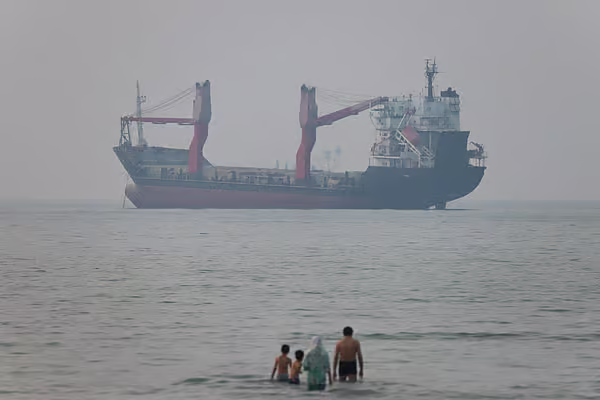
Shipping activity through the Strait of Hormuz has become a major concern for governments, energy markets and global traders.
Only seven commodity vessels crossed the strategic waterway on Thursday, August 20, according to shipping data cited in reports. The number was roughly half the figure recorded a day earlier.
Four vessels entered the strait while three exited. No very large crude carriers or liquefied natural gas tankers were among the ships passing through during the period.
The sharp decline highlights the risks facing commercial shipping as the US-Iran conflict continues and negotiations remain uncertain.
The Strait of Hormuz is one of the world’s most important maritime chokepoints, with major volumes of oil and gas traditionally passing through the narrow waterway. Continued disruption has the potential to affect energy supplies, freight costs and international markets.
Oil Prices Rise as Sanctions Threats Intensify
Oil markets reacted to growing concerns over possible further restrictions on Iran and its trading partners.
Brent crude climbed to around $94 a barrel on Friday, while US West Texas Intermediate crude traded above $87. Both benchmarks recorded strong weekly gains as traders assessed the possibility of tighter energy supplies.
The United States has threatened what it describes as the toughest sanctions yet against Iran and has also warned countries providing economic support to Tehran.
Iran has strongly rejected the campaign, while China said sanctions and pressure would not provide a solution to the conflict and called for a political and diplomatic settlement.
The economic confrontation has become an increasingly important front in the broader crisis, adding pressure to already disrupted oil flows.
Iranian Oil Supplies to China Face Pressure
Trade sources reported that offers of Iranian crude to Chinese buyers have declined as restrictions and shipping disruptions affect Tehran’s ability to move oil.
Iranian crude held in floating storage has also reportedly fallen as existing supplies are sold and new shipments face greater obstacles.
The pressure on Iranian exports comes as Washington considers expanding economic measures against Tehran and entities accused of helping the country bypass restrictions.
However, the sanctions campaign also carries wider risks for the global economy, particularly if disruptions continue across energy markets and the Strait of Hormuz remains difficult for commercial shipping.
Iran Warns of ‘Devastating’ Response
Iranian officials have warned that any new military threats from the United States would trigger a powerful response.
The chief of staff of Iran’s armed forces said the country’s military was prepared to respond across land, sea, air, air defence and cyberspace.
Iranian parliament speaker Mohammad Baqer Ghalibaf also argued that the country must prepare to overcome what Tehran describes as unjust sanctions and economic pressure.
The statements underline the fragile state of relations between Washington and Tehran, despite the renewed discussion between Iran and Oman over creating conditions for diplomacy.
US Focuses on Economic Pressure
US Treasury Secretary Scott Bessent suggested that stronger sanctions could reduce the need for further major military operations.
Washington is expected to provide further details on the proposed economic measures against Iran and networks accused of supporting its economy.
The approach represents a major shift towards economic pressure as a central part of the US strategy. President Donald Trump has described the campaign as a form of economic warfare, while Iranian officials have condemned it as economic terrorism.
The confrontation is also affecting countries far beyond the immediate conflict zone, with governments facing higher energy costs, shipping risks and broader uncertainty in global trade.
Conflict Spreads Across the Region
The continuing crisis has produced consequences across several fronts.
Pakistan said two of its sailors were killed and six others injured in a recent Houthi attack on a commercial vessel. Meanwhile, maritime security agencies have reported a rise in piracy incidents near Somalia and the Gulf of Aden.
An Eritrea-flagged oil tanker under US sanctions over alleged Iranian petroleum shipments was reportedly boarded by armed individuals off Yemen and diverted toward Somalia.
The incident has added another layer of concern to already difficult conditions for shipping companies operating near the Middle East and East African coast.
Turkey and Israel Trade Fresh Accusations
Regional tensions have also intensified between Turkey and Israel.
Israel’s Prime Minister Benjamin Netanyahu’s office accused Turkish President Recep Tayyip Erdogan of destabilising the region, while Turkey condemned what it described as attempts to portray Ankara as a new threat.
The exchange followed reports of an international arrest warrant sought by Turkey against Netanyahu over Israel’s interception of an aid flotilla linked to Gaza.
The growing diplomatic dispute demonstrates how the wider regional conflict is affecting relations between countries beyond the main US-Iran confrontation.
Global Markets Remain on Edge
The geopolitical uncertainty has continued to influence global financial markets.
Oil prices have remained elevated, gold has attracted strong investor interest, and stock markets have experienced increased volatility.
Bitcoin also recorded a strong rebound as investors assessed actions by the US Treasury and wider shifts in market liquidity.
Goldman Sachs said continued demand for bullish options could potentially push gold prices beyond its year-end forecast if investor demand and central bank purchases remain strong.
For consumers, the consequences are also becoming more visible. Higher oil and fuel prices can increase transportation and food costs, placing additional pressure on household budgets.
What Happens Next?
The discussions between Iran and Oman provide one of the few visible signs that diplomacy could still return to the centre of the crisis.
However, significant obstacles remain.
Washington continues to prepare tougher economic measures, Tehran is maintaining a defiant stance against further pressure, and commercial traffic through the Strait of Hormuz remains severely affected.
The coming days will be closely watched for signs of progress in Oman-mediated diplomacy, changes in shipping activity and new announcements regarding US sanctions.
For now, the Strait of Hormuz remains a major symbol of the crisis — where military tension, economic pressure and global energy security continue to intersect.
As the conflict approaches six months, the key question remains whether diplomatic engagement can produce a path towards de-escalation before further economic and regional damage occurs.
Conclusion
The latest talks between Iran and Oman highlight renewed efforts to keep diplomatic channels open during one of the most tense periods in the Middle East.
With shipping traffic through the Strait of Hormuz sharply reduced, oil prices rising and sanctions pressure increasing, the stakes for a negotiated solution are growing.
Whether the Oman-Iran discussions can develop into meaningful negotiations remains uncertain. But with the conflict continuing to affect global energy markets, international trade and regional security, diplomacy may become increasingly important in determining what happens next.