



























Motorists travelling between Dubai and Sharjah could soon see a significant improvement in one of the busiest commuting corridors in the UAE, with the first phase of Sharjah’s Al Taawun Tunnel project expected to open in November 2026.
The major road project is designed to reduce congestion around Al Taawun Roundabout and could cut waiting times by as much as 85 per cent, offering drivers a faster and more direct route towards Dubai.
The first phase is expected to be ready ahead of the 2026 Sharjah International Book Fair, while the wider project is scheduled for completion in February 2027.
What is the Al Taawun Tunnel project?
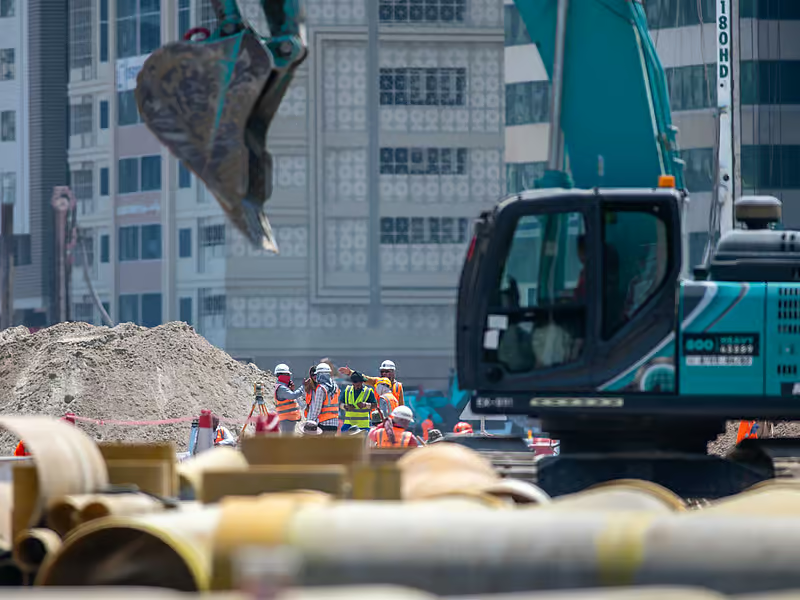
At the centre of the project is a 500-metre underground tunnel being built beneath Al Taawun Roundabout.
The tunnel will provide a direct connection between Al Taawun Street and Al Nahda Bridge towards Dubai. By moving a significant portion of traffic underground, the project aims to reduce the pressure currently placed on the roundabout and surrounding surface-level junctions.
The first phase will also include connecting roads towards Sheikh Mohammed bin Zayed Street and Emirates Road.
The objective is straightforward: create a smoother and more continuous route for motorists travelling between key roads in Sharjah and Dubai.
How will the tunnel ease Dubai-Sharjah traffic?
The existing Al Taawun Roundabout can experience heavy congestion, particularly during peak commuting periods.
The new tunnel will allow motorists to bypass the surface roundabout instead of navigating the existing junction. This uninterrupted route is expected to reduce delays and improve traffic movement through the area.
Authorities expect waiting times to fall by up to 85 per cent once the new infrastructure is operational.
A new signalised intersection will also support the project and is designed to handle approximately 4,200 vehicles per hour in each direction during peak periods.
That additional capacity should help distribute traffic more efficiently across the surrounding road network.
Which roads will the Al Taawun Tunnel connect?
The tunnel will directly link Al Taawun Street with Al Nahda Bridge and Dubai.
The wider road improvement scheme includes connections towards Sheikh Mohammed bin Zayed Street and Emirates Road, strengthening links between Al Taawun and several major routes across the UAE.
The project is also expected to become part of a future transport corridor connecting with Al Noor Road.
For residents and commuters, the changes could provide more route options while reducing the burden on existing junctions.
Better access to Expo Centre Sharjah
The road improvements are also expected to make access to Expo Centre Sharjah more convenient.
The venue is an important destination in the Al Taawun area, attracting visitors for exhibitions, events and major gatherings. Improving road capacity around the area could therefore benefit both daily commuters and event traffic.
What happened to the Al Taawun Roundabout monument?
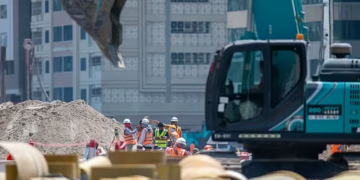
The construction of the underground tunnel required the temporary removal of the well-known Al Taawun Roundabout monument.
Before construction began, engineering teams examined its foundations. They found that the structure was deeply rooted, making it difficult to carry out the underground works without dismantling the monument.
However, the landmark is not being permanently removed.
Sharjah’s Ruler, Sheikh Dr Sultan bin Muhammad Al Qasimi, has reassured residents that the monument will be redesigned and reconstructed at its original location after the tunnel project is completed.
When will the Al Taawun Tunnel open?
The first phase is expected to open in November 2026, ahead of the Sharjah International Book Fair.
The complete project is scheduled to be finished in February 2027.
The phased approach means motorists could begin benefiting from the new tunnel before all elements of the wider development are completed.
Sharjah’s wider road expansion
The Al Taawun Tunnel is part of broader efforts to improve road infrastructure and traffic capacity across Sharjah.
Another major project is the Sheikh Khalifa bin Zayed Street-Maliha Street intersection. It includes a three-lane overpass measuring approximately 500 metres, together with nearly 2.5km of surface roads.
The Dh140-million project is expected to double traffic-flow efficiency and reduce the journey from central Sharjah towards Maliha Road from around 20 minutes to approximately 10 minutes.
Sharjah has also increased capacity on Emirates Road by adding two lanes to a five-kilometre section towards Wadi Al Amardi. The expansion has taken the road from six lanes to eight and is expected to increase capacity by about 33 per cent while reducing peak-hour journey times by up to 25 per cent.
Road maintenance and safety works are continuing in other parts of the emirate, including Al Jazzat and Al Hazana, where resurfacing and road-marking improvements have been carried out.
What it means for daily commuters
The timing of the Al Taawun project is particularly significant as schools reopen and daily travel between Dubai and Sharjah returns to full pace.
For thousands of motorists, congestion along the Dubai-Sharjah corridor is a daily challenge. Moving traffic underground at one of the area’s busiest intersections is intended to address one of the key pressure points.
If the projected reductions are achieved, the Al Taawun Tunnel could become an important part of Sharjah’s transport network, providing faster movement between the emirates while increasing capacity on surrounding roads.
With the first phase expected to open in November, motorists will soon get their first indication of how significantly the new tunnel can change traffic movement in the Al Taawun area.