

































Iraqi Prime Minister Ali Falih Al-Zaidi has received a renewed invitation to visit Saudi Arabia as Baghdad works to contain tensions following deadly strikes in Iraq and growing friction involving Iran-aligned armed groups.
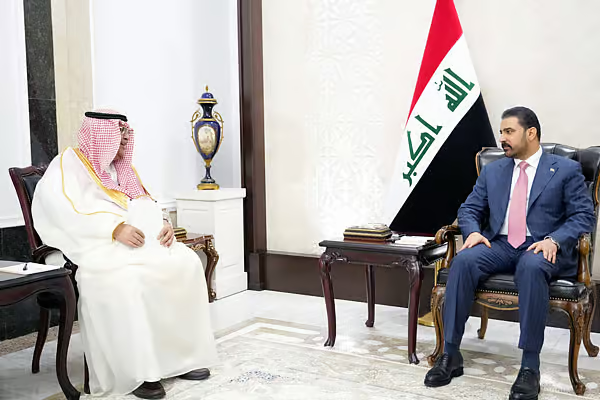
The invitation was conveyed during a meeting in Baghdad between Al-Zaidi and Saudi General Intelligence chief Khalid bin Ali Al Humaidan, according to the Iraqi prime minister’s office.
The Iraqi leader had been scheduled to travel to Riyadh in late July, but the visit was cancelled after US and Saudi forces carried out strikes in Iraq on July 29. The attacks reportedly killed 20 militants, including five Iranians.
Baghdad stresses commitment to regional security
During his meeting with the Saudi intelligence chief, Al-Zaidi discussed developments affecting regional security and reiterated Iraq’s position that its territory should not be used to launch attacks against other countries.
The Iraqi government has sought to prevent its territory from becoming a wider battleground amid heightened tensions between Saudi Arabia and Iran-backed armed groups operating in Iraq.
The renewed invitation to Riyadh could provide an opportunity for direct discussions on security concerns and broader relations between Baghdad and the Saudi government.
Iran-aligned groups delay response
The diplomatic development comes as Iran-aligned Iraqi armed groups have postponed a planned response to last month’s strikes.
The Islamic Resistance in Iraq said it had delayed its response following an appeal from Hadi al-Amiri, a prominent pro-Iranian political figure, along with calls from other political leaders.
The group did not provide details about the nature of the planned response or identify a potential target.
The decision to delay retaliation could create additional space for diplomatic efforts aimed at preventing further escalation.
Wider regional tensions remain high
The developments in Iraq come as diplomatic activity continues across the wider Middle East.
Iranian negotiators are awaiting final approval for a proposed arrangement involving Oman and the United States, while Washington has indicated that restrictions on Iranian ports could be eased if an agreement is reached and Tehran fulfils its commitments.
At the same time, Saudi Arabia, Pakistan and Turkey have signed a joint defence agreement in Makkah under which an armed attack against one of the three countries would be treated as an attack against all.
Against this backdrop, Iraq faces the difficult task of maintaining its sovereignty while managing relationships with neighbouring states and powerful regional actors.
A potential visit by Al-Zaidi to Riyadh could therefore become an important channel for discussions on regional security, bilateral relations and efforts to prevent further escalation.