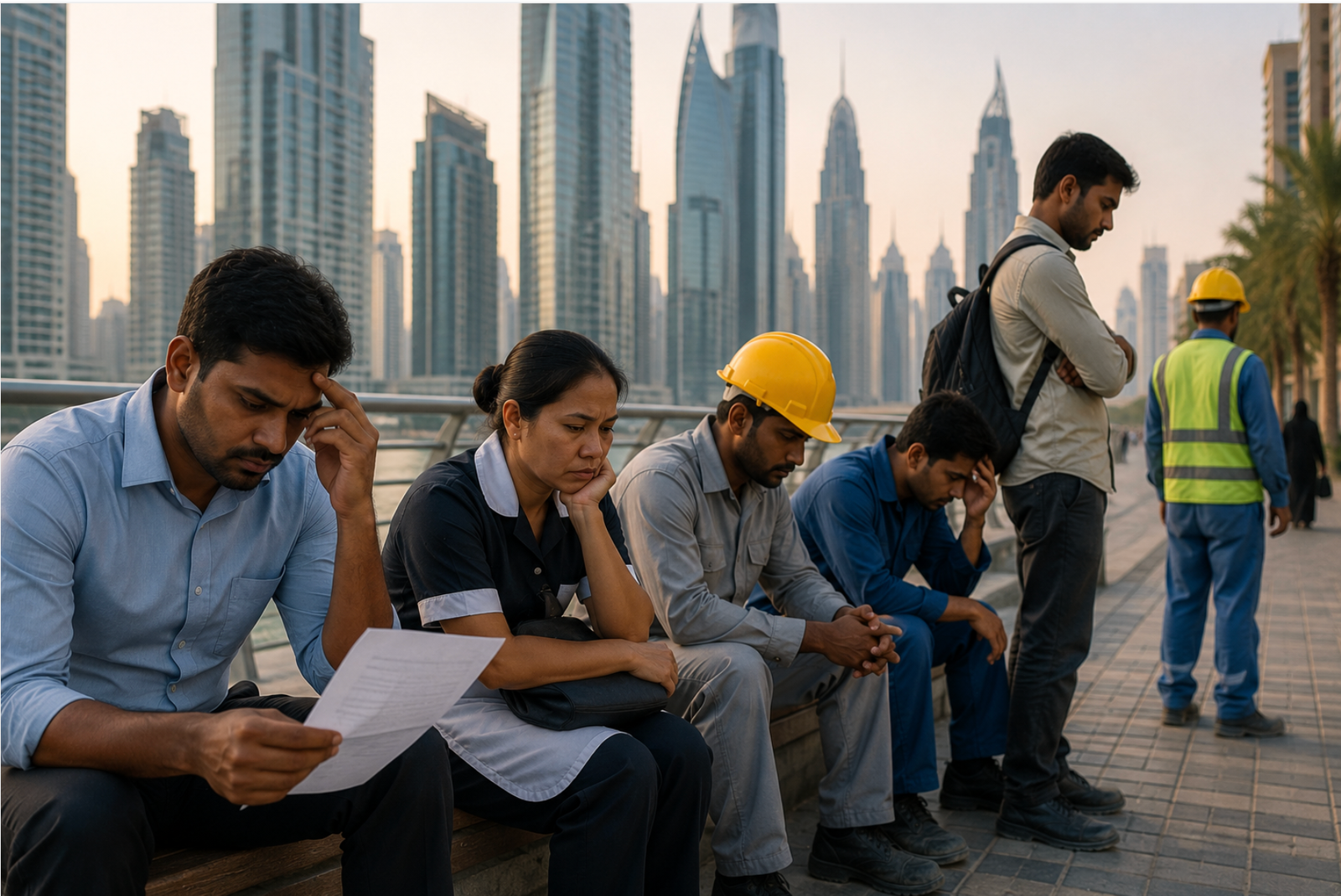
Dubai: The slowdown triggered by months of instability across the Gulf is beginning to reshape Dubai’s labour market, with many migrant workers reporting fewer vacancies, shrinking incomes and longer job searches.
For thousands of expatriates, particularly those employed in hospitality, retail, construction and domestic services, finding work has become increasingly difficult as companies tighten spending and delay recruitment.
Workers say the effects became noticeable after military tensions spread across the region earlier this year, affecting sectors closely linked to tourism and international travel. Although the UAE has continued to project confidence in its economy, many employees say business activity has yet to return to previous levels.
Among those searching for work is Joy Vivanda, a domestic worker from the Philippines, whose employer left the UAE during the period of heightened regional uncertainty. Since losing her job, she has spent months visiting residential neighbourhoods and contacting potential employers in the hope of securing new work.
Returning home is not an option, she says, as her earnings support her children back in the Philippines.
A similar story has unfolded for Indian accountant Mujeeb Rahman, who lost his position after the catering company where he worked suspended operations. He said businesses are facing weaker cash flow and recruitment has slowed considerably across several sectors.
Industry surveys reflect the cautious mood among employers. A recent hiring outlook found that a significant share of companies in the UAE expect to reduce headcount in the coming months, while many others have no immediate plans to recruit new staff.
Even workers who have retained their jobs say their earnings have been affected.
Retail employee Zekra Elsa said lower tourist footfall has reduced sales, prompting her employer to shift from a fixed salary structure to commission-based pay. Construction and maintenance workers have also reported fewer projects, leaving many on duty without regular assignments.
The UAE government has introduced financial support measures aimed at helping businesses manage the economic slowdown. Officials have repeatedly described the impact as temporary and expressed confidence that economic activity will recover as regional conditions improve.
Business leaders have also maintained that Dubai’s long-term outlook remains strong, pointing to the emirate’s diversified economy and ability to recover from previous disruptions.
For many migrant workers, however, the immediate concern remains employment.
Venkat, an Indian hotel employee who recently returned home after losing his job in Dubai, said his income had covered his children’s education and household expenses. Without that support, managing day-to-day finances has become increasingly difficult.
Although hopes briefly rose after signs of easing tensions, uncertainty continues to influence business sentiment across the Gulf. Many expatriate workers say they are choosing to remain in Dubai, waiting for hiring activity to improve rather than returning home without an alternative source of income.
Author
-
Ahmed Al Mansoori is a Senior Staff Writer at The Dubai Herald, covering UAE news, Gulf affairs, business, government policy, infrastructure, and regional developments. With a strong focus on accurate reporting and in-depth analysis, he writes about the stories shaping the UAE and the wider Middle East. His work includes coverage of economic trends, public policy, transportation, real estate, and breaking news, helping readers stay informed on issues that impact businesses, residents, and investors across the region.