

































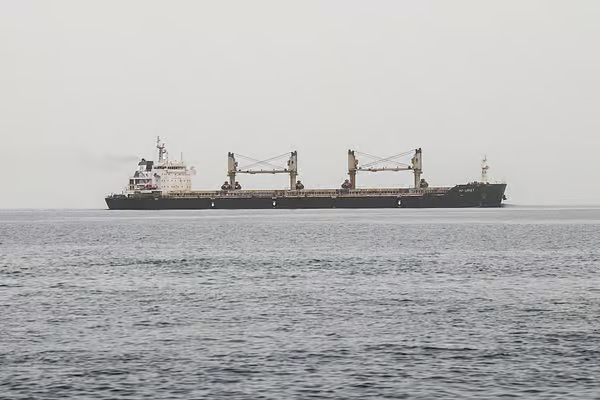
Three Pakistani nationals have been killed and another injured in an attack on a commercial vessel in the Red Sea, Pakistan’s Foreign Minister Ishaq Dar said on Wednesday, as renewed violence threatens shipping through key maritime routes in the region.
Dar said the victims were Pakistani citizens and condemned the attack, describing strikes on commercial vessels as a threat to civilian lives, maritime security and freedom of navigation.
The incident occurred amid heightened tensions across the Middle East, with shipping activity also declining sharply in the Strait of Hormuz as vessel operators navigate the continuing conflict.
Pakistan confirms deaths
Pakistan’s foreign minister said three nationals died in the attack and one other Pakistani was injured.
Authorities are working with Saudi officials and Yemen’s internationally recognised government to establish further details about the incident and determine the circumstances surrounding the attack.
The Pakistani government strongly condemned the strike on what it described as a non-combatant commercial vessel.
The latest incident adds to growing concerns over the safety of crews and commercial shipping passing through the Red Sea and other strategic waterways in the region.
Shipping traffic drops in Strait of Hormuz
The attack comes as commercial traffic through the Strait of Hormuz has fallen to its lowest level in about a week.
Shipping data showed that only eight vessels were tracked in the waterway on Tuesday, significantly below the recent 10-day average of around 12 vessels a day.
Before the current conflict and disruptions, around 130 to 140 ships typically passed through the strategic strait each day.
The decline highlights the growing caution among ship operators as geopolitical tensions continue to affect one of the world’s most important energy corridors.
Oil and gold prices rise
Financial markets have also reacted to the latest escalation.
Oil and gold prices moved higher on Wednesday as investors assessed renewed risks to shipping and energy supplies. Rising geopolitical uncertainty has increased demand for traditional safe-haven assets such as gold.
The potential for prolonged disruption around the Strait of Hormuz and the Red Sea remains a key concern for global energy markets, given the importance of both routes to international trade.
Wider regional tensions continue
The latest attack came as fighting and diplomatic efforts continued across the wider Middle East.
Elsewhere, Iranian Kurdish opposition camps near Erbil in Iraq were reportedly targeted by drones, while Lebanon reported an Israeli strike in the south that killed one person and damaged an ambulance.
The developments underscore the fragile security environment across the region despite ongoing diplomatic efforts to reduce tensions.
For Pakistan, the deaths of its nationals have added another layer of concern as the country seeks further information about the attack and the safety of its citizens working aboard commercial vessels.
The incident is likely to keep attention focused on maritime security in the Red Sea, Bab el-Mandeb Strait and Strait of Hormuz, where disruptions could have wider consequences for global trade, shipping costs and energy markets.