
























New Delhi: Congress leader and Leader of the Opposition in the Lok Sabha Rahul Gandhi on Tuesday intensified his attack on the Centre over the police action against student protesters, demanding that Prime Minister Narendra Modi apologise to the country’s youth and resign along with Union Home Minister Amit Shah following the crackdown on demonstrations linked to the NEET paper leak controversy.
The remarks came a day after clashes between police and protesters during the Cockroach Janta Party (CJP)-led “Chalo Sansad” march in New Delhi, where thousands of students and supporters gathered to demand accountability over alleged examination irregularities and the resignation of Union Education Minister Dharmendra Pradhan.
Rahul Gandhi Questions Government’s Silence
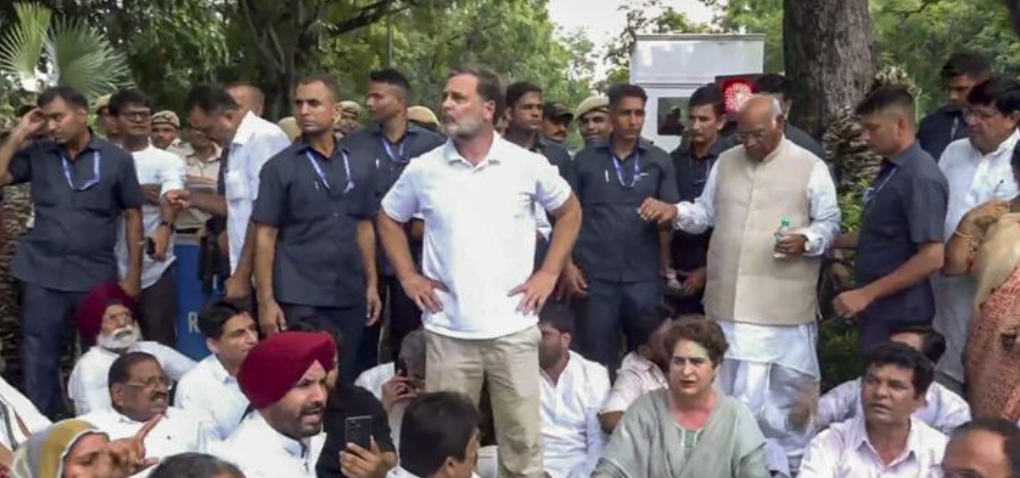
Speaking to reporters inside the Parliament complex during the Monsoon Session, Gandhi accused the government of failing to address what he described as police brutality against students.
“The issue concerns students, and the manner in which they were beaten is completely unacceptable,” Gandhi said, adding that the Prime Minister had not publicly responded to the events despite nationwide concern.
He said he had met Lok Sabha Speaker Om Birla along with other Opposition MPs to seek a discussion on the issue in Parliament.
According to Gandhi, the Speaker indicated that the matter would require the government’s approval before being scheduled for debate. Gandhi questioned why Parliament was unable to immediately discuss an issue affecting millions of students and their families.
“Education System Has Been Hollowed Out”
Rahul Gandhi argued that the ongoing controversy extends beyond a single examination and reflects deeper concerns about India’s education and recruitment systems.
He claimed repeated examination paper leaks and irregularities have damaged public confidence in competitive examinations, saying students themselves have repeatedly highlighted failures in the existing testing system.
The Congress leader maintained that the protests represent widespread frustration among young people rather than a purely political movement.
Calls for Resignation of PM, Shah and Pradhan
While student groups have primarily demanded the resignation of Education Minister Dharmendra Pradhan, Gandhi expanded his criticism by holding the country’s top leadership politically responsible.
He argued that while the Education Minister should step down over the examination controversy, responsibility for the police action rested with the Union Home Ministry.
“The Home Minister is responsible for the police response, and the Home Minister reports to the Prime Minister,” Gandhi said, calling for both Amit Shah and Prime Minister Modi to resign.
Gandhi also said he planned to visit students injured during the protests.
Parliament Faces Fresh Deadlock
The controversy quickly spilled into Parliament, where Opposition parties demanded an immediate debate on both the alleged NEET paper leak and the police action against protesters.
Repeated slogan-shouting and protests by Opposition MPs disrupted proceedings in both the Lok Sabha and Rajya Sabha for the second consecutive day, forcing multiple adjournments during the ongoing Monsoon Session.
The Opposition has argued that Parliament should discuss both the integrity of India’s examination system and the government’s handling of public demonstrations.
Background: Why Students Are Protesting
The protests stem from allegations of irregularities surrounding the National Eligibility cum Entrance Test (NEET), India’s largest medical entrance examination.
The controversy has affected more than 2.2 million candidates, prompting demands for stronger safeguards against examination fraud, greater transparency in recruitment and testing processes, and accountability from those responsible for paper leak networks.
The demonstrations have largely been coordinated by the Cockroach Janta Party (CJP), a student-led movement that has gained national attention through social media campaigns calling for reforms in India’s education system.
Government’s Position
The government has defended its response to the controversy, stating that authorities acted quickly after reports of examination irregularities emerged.
Prime Minister Modi, while addressing NDA leaders earlier on Tuesday, said paper leaks were a national challenge rather than an issue confined to one government or state. He called for the toughest possible legal action against those involved in examination fraud and emphasized the need for a stronger system to prevent future leaks.
Delhi Police has also defended its handling of Monday’s demonstrations, maintaining that officers acted after protesters attempted to breach barricades and turn the march toward Parliament violent. Protest organizers, however, dispute that account and allege that excessive force was used against demonstrators.
Political Tensions Continue
The confrontation has become one of the biggest political flashpoints of the Monsoon Session, with the government and Opposition sharply divided over both the examination controversy and the police response.
As protests continue in the national capital and demands for accountability grow, Parliament is expected to witness further confrontations over education reforms, examination security, and the handling of public demonstrations in the days ahead.