




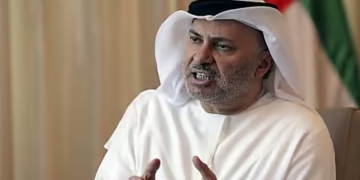


















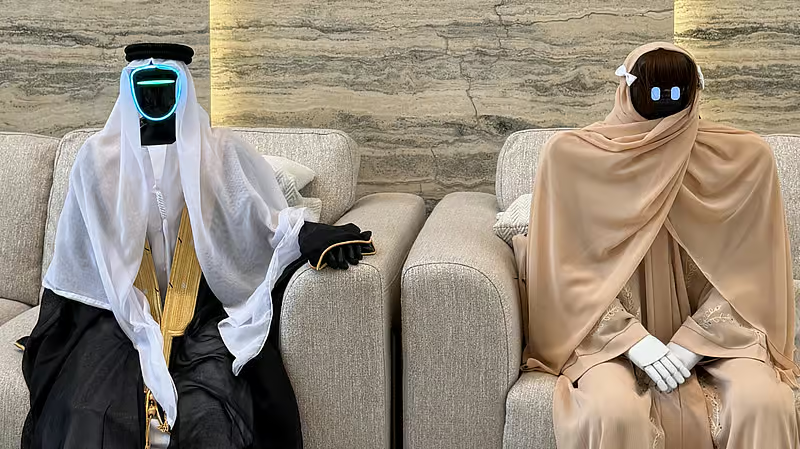
The UAE’s unusual robot wedding, featuring humanoid characters Bu Sunaidah and Moza, was more than an eye-catching social media moment. Its organiser, Emirati entrepreneur and technology advocate Yousif Lootah, says the event was designed to make robotics and artificial intelligence more accessible to the public while showing how technology can coexist with Emirati culture.
The ceremony quickly attracted attention online, but Lootah said entertainment was only part of the idea. The larger goal was to encourage people, particularly children and young people, to become curious about robotics and AI.
Why did the UAE hold a robot wedding?
Lootah explained that the concept was created to bring people together and introduce emerging technology in a way that felt familiar and enjoyable.
Rather than presenting robots as complicated machines, the wedding placed them in a setting closely connected to everyday Emirati traditions. The organisers paid attention to the ceremony, cultural details and overall presentation to create an experience that people could remember.
According to Lootah, getting people to smile and engage with the idea was an important first step. Once people become interested, he believes, they are more likely to ask questions about robotics, artificial intelligence and the technology shaping the future.
Bu Sunaidah and Moza represent Emirati identity
The robotic groom, Bu Sunaidah, and bride, Moza, were given names chosen to reflect Emirati identity and make the characters feel familiar to local families.
Bu Sunaidah was developed as a sociable Emirati robot with an interest in innovation and public interaction. Moza represents an intelligent female robotic character focused on learning, creativity and using technology to benefit people.
Lootah said the intention was to demonstrate that technological progress does not have to come at the expense of national identity.
Instead, he believes technology can provide new ways to present Emirati culture and values to younger generations.
Children were at the heart of the celebration
For Lootah, the most important measure of the event was not the number of guests but the conversations it sparked.
Children, families and young people reportedly showed interest in the robots, taking photographs and asking questions about robotics and AI.
Lootah said that if the event inspired even one child to consider becoming a robotics engineer, it would have achieved its purpose.
The robotic couple, naturally, could not eat the food served to guests. But their presence helped create an unusual setting where technology became part of a familiar social and cultural experience.
Robot wedding sparks debate about the future of work
The ceremony also generated plenty of reactions online, with social media users joking about a future in which robots could become part of everyday workplaces.
Lootah does not view robotics as simply a replacement for human workers. Instead, he expects robots to work alongside people, assist with tasks and create opportunities for greater productivity and innovation.
He also sees robotics as a potential tool for improving quality of life and expanding educational opportunities.
A UAE honeymoon with an educational purpose
If Bu Sunaidah and Moza ever go on a honeymoon, Lootah has one destination in mind: the UAE.
A possible itinerary could include the Museum of the Future and other major attractions, but Lootah says the couple’s more important journey would be connected to education.
His broader ambition is for the UAE to establish itself as a global centre for robotics and artificial intelligence.
He envisions robotics competitions, specialist development centres and programmes that introduce students to robot design and programming in schools and universities.
UAE aims to become a robotics and AI leader
Lootah’s plans extend beyond the viral wedding. He wants young Emiratis to move from simply using artificial intelligence to understanding how to develop and innovate with the technology.
His vision includes giving students opportunities to design and programme robots while encouraging universities, companies and international innovators to contribute to the UAE’s growing technology ecosystem.
The robot wedding may have looked unusual, but its message was straightforward: emerging technology can be introduced through culture, entertainment and education.
For Lootah, Bu Sunaidah and Moza are not simply robotic newlyweds. They are intended to represent a future in which Emirati-developed technology plays a bigger role in schools, workplaces and everyday life.