



















Dubai’s sports landscape is entering a new phase, with modern venues increasingly focused on creating communities and experiences rather than simply providing places to exercise.
For years, the success of sports facilities was largely measured through memberships, visitor numbers, utilisation rates and revenue. While those figures remain important, the strongest sports destinations are discovering that long-term success depends on something harder to measure: how people feel when they are there.
The experience behind successful sports venues
The difference between an ordinary sports facility and a destination people return to often has little to do with the size of the building or the latest equipment.
A welcoming reception, a coach who remembers a young player’s name or a team member who notices when someone needs assistance can create a lasting connection. These everyday interactions help transform a venue from somewhere people visit into a place where they feel they belong.
That sense of belonging can influence whether customers remain members, recommend a facility to friends or become active members of its wider community.
From fitness centres to lifestyle destinations
Sports venues are increasingly serving purposes beyond traditional exercise. Families can spend time together, children can explore new activities, professionals can unwind and people from different backgrounds can connect through sport.
This shift reflects changing expectations among customers, who are looking for a combination of fitness, wellness, entertainment, social interaction and community.
Sport is uniquely positioned to bring people together. Whether through football, swimming, padel, climbing or other activities, shared participation can create connections that extend well beyond the playing field.
Why Dubai is well positioned for the next era of sport
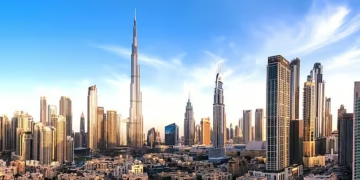
Dubai has built a strong reputation as a global sports hub, attracting international competitions, elite athletes and major investment in sporting infrastructure.
The city’s next opportunity is to combine that infrastructure with experiences that encourage people to participate regularly and develop lasting connections with their local communities.
A successful sports destination can therefore play a broader role in promoting active lifestyles while supporting families, young athletes and recreational participants.
AllSports Arena reflects the changing model
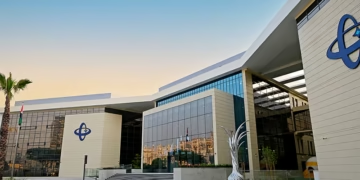
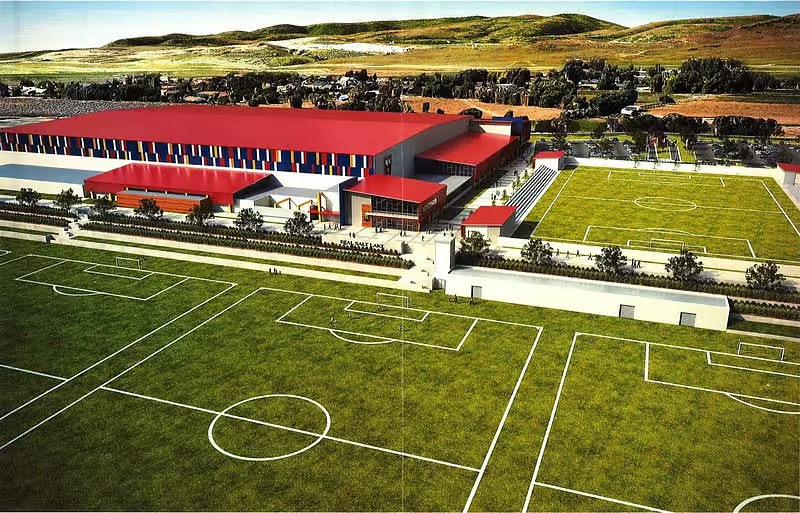
One example of this approach is AllSports Arena Dubai, developed by Galadari Brothers as a large indoor sports destination.
The venue brings together a broad range of activities, including football, padel, swimming, squash, climbing, gymnastics, fitness, wellness and recovery.
The significance of such a model extends beyond the number of facilities available. By bringing different activities and age groups together under one roof, a sports destination can create more opportunities for people to discover new interests, stay active and spend time with others.
The goal is not simply to build a larger facility, but to create an environment that becomes part of people’s everyday lives.
People remain at the heart of sports
Technology, infrastructure and commercial performance will continue to influence the development of modern sports venues. However, the human element remains critical.
Buildings do not create culture on their own. Staff, coaches and community members create it through their interactions and the atmosphere they establish.
For sports businesses, this means that commercial growth does not necessarily come from selling more aggressively. It can come from providing better experiences and understanding what customers value beyond access to equipment.
The future of sports destinations
The most successful sports destinations may ultimately be judged by the communities they build rather than the size of their facilities.
People are unlikely to remember the exact dimensions of a venue, but they may remember the coach who encouraged them, the friends they made, their child’s first sporting achievement or simply how welcome they felt.
For Dubai, the evolution of sports destinations represents an opportunity to combine world-class infrastructure with stronger community experiences.
The future of sport is therefore not only about building better facilities. It is about creating places that encourage participation, bring people together and inspire healthier, more connected lifestyles.
Dubai Herald continues to follow the UAE’s evolving sports, business and lifestyle landscape.